
Windmills, Craters, and Cormorants – Cycling the Baltics (Vilnius to Tallinn)
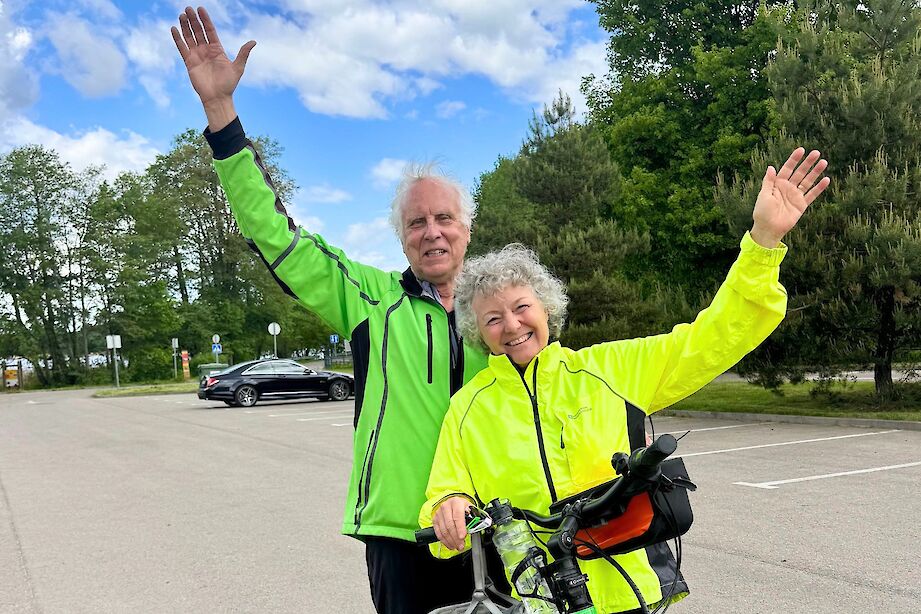
When we started looking for another European cycling destination, our criteria were simple: cool weather, scenic roads, and as few fellow humans as possible. The Baltic States checked every box. No heatwaves, no elbow-to-elbow tourist queues—just quiet roads, open landscapes, and enough fresh air to convince us we’d made an excellent life decision.
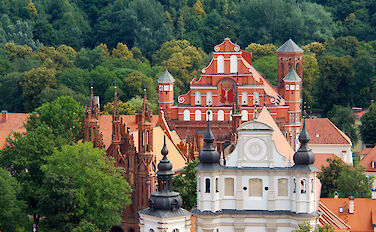
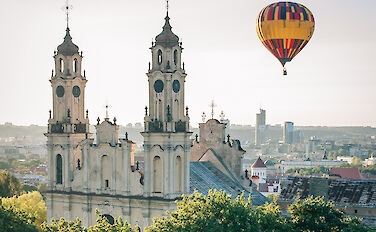
We arrived in Vilnius a day before the start of our nine-day cycling adventure through Lithuania, Latvia, and Estonia. The extra day gave us time to wander the cobblestone streets of the Old Town, sample local cuisine, and coax our circadian rhythms to adjust before setting off on our bikes.
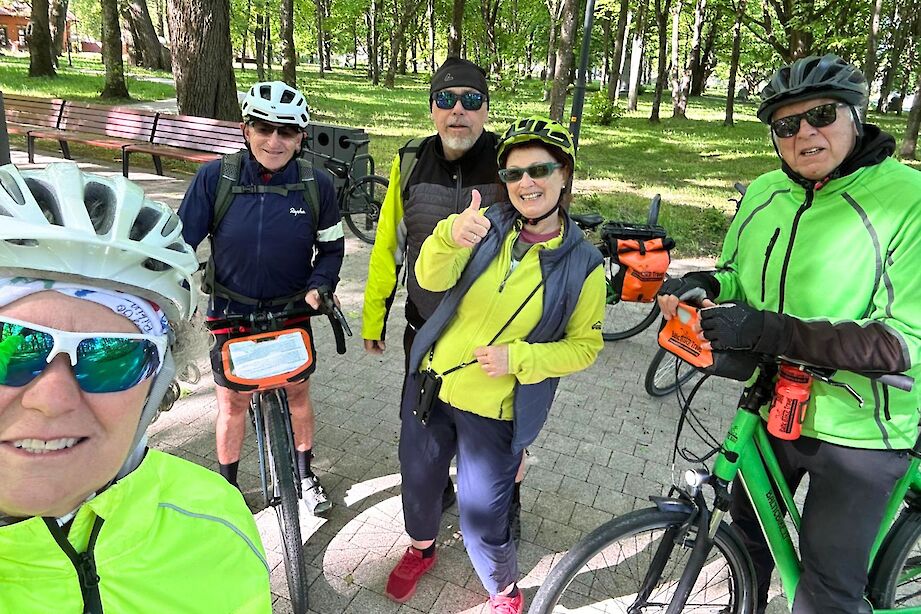
Our first official day began with a guided walking tour. Aware that my jet-lagged septuagenarian brain had limited processing capacity, I jokingly asked our guide to give us the highlights—but not every detail; to share the history, but not begin with the Ice Age; and to move on whenever he noticed that familiar glazed expression starting to appear on our faces.
Then it was time to ride. After a short transfer out of the city, Andrius, our support driver, unloaded our bikes, handed us maps and GPS units, pointed out our rendezvous points for the day, and sent us on our way.
This was only meant to be a 40-kilometre warm-up ride, but the rolling hills and relentless headwinds quickly convinced us that choosing e-bikes had been a wise decision. Despite the climbs and the wind seemingly determined to blow straight through our souls, we made it to the finish line tired, hungry, slightly windburned, and feeling proud of ourselves for not getting lost in a Lithuanian potato field on our very first day. We spent the night in Kaunas, where we properly celebrated that first day’s athletic heroics with large quantities of food and no physical movement whatsoever.
The next morning arrived far too quickly. It was chilly and overcast, and after our introduction to Baltic weather the day before, we wisely dressed in layers, knowing it would be easier to peel clothing off than wish we had brought more. I resigned myself to abandoning any hope of looking like a sleek, athletic cyclist and instead embraced the appearance of an overstuffed sausage casing.
The day's ride would take us west toward the Baltic Sea and eventually down the Curonian Spit, a long, narrow 70-kilometre ribbon of sand separating the Baltic Sea from the Curonian Lagoon.
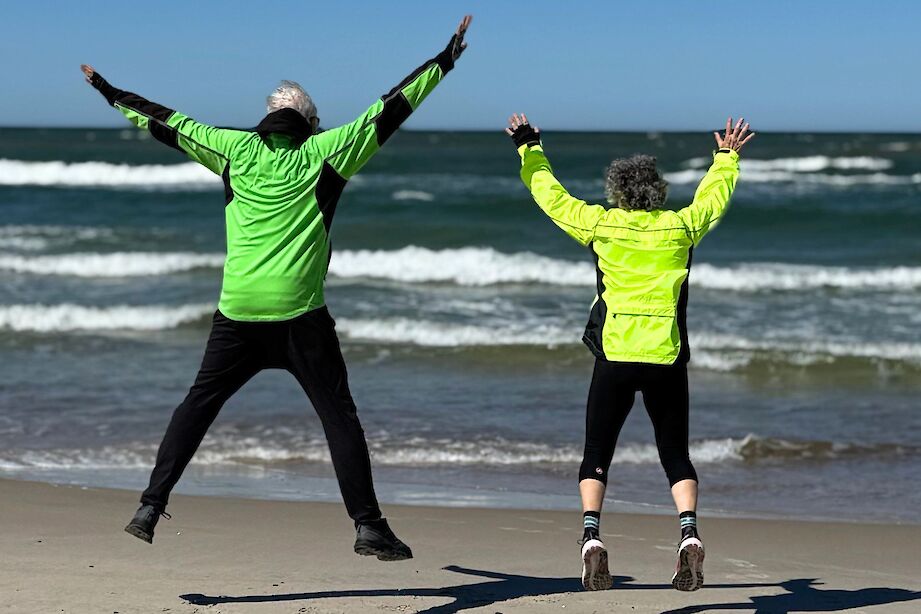
As it turned out, all that extra clothing was unnecessary. We rode beneath clear blue skies for most of the day. The Curonian Spit was smooth paved paths from one end to the other. It was windy—after all, we were riding alongside the Baltic Sea—but the wind was at our backs. We practically floated along. With the wind giving us a gentle push, we had the luxury of taking our time: exploring the Spit, dipping our toes in the Baltic Sea, and climbing some of its towering sand dunes on foot. The Curonian Spit is essentially one giant sand dune. During the 17th and 18th centuries, shifting sands and powerful winds buried entire fishing villages here, forcing their inhabitants to relocate.
One of the day's most memorable moments came during our encounter with a colony of grey cormorants. As we pedalled along, we began hearing an odd commotion coming from the forest ahead. The noise grew louder—an eerie, Jurassic Park-type soundtrack echoing through the forest—the closer we got. Looking up, we discovered hundreds of enormous nests perched high in the branches, with the occasional bird poking its head out like some prehistoric creature keeping watch over its domain. A few seconds later, mysterious white droplets began falling from above. At that point, we decided this was perhaps not the ideal place to linger.
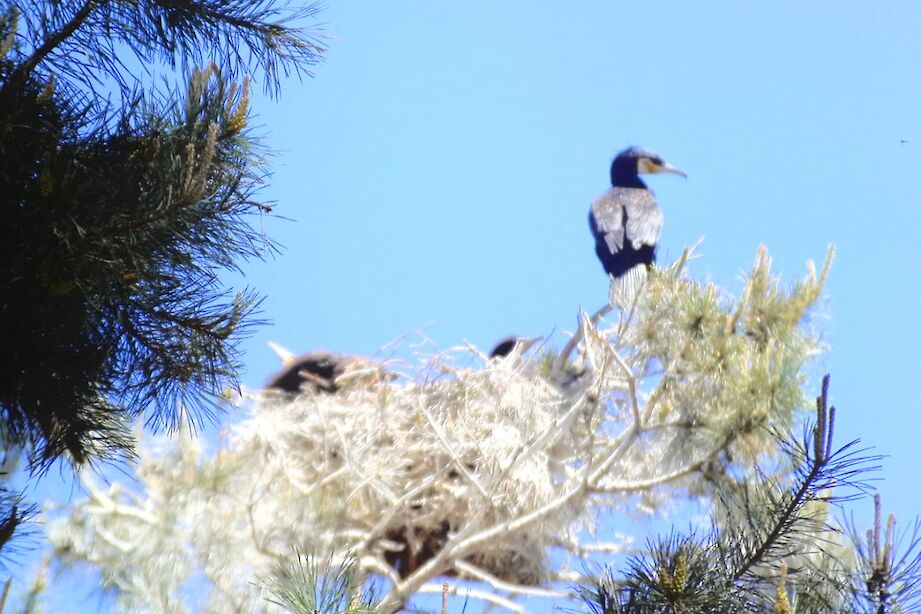
We had unknowingly wandered into one of the oldest and largest cormorant colonies in Europe. Nearly 2,000 great cormorants nest there, creating an atmosphere that is both fascinating and slightly unsettling. The birds' highly acidic droppings have stripped much of the surrounding vegetation, leaving behind a landscape of ghostly, leafless trees that looks more post-apocalyptic than picturesque. Apparently, cormorants are not particularly fond of unexpected visitors. I suspect the sight of five cyclists rolling into their neighbourhood, staring up at them in amazement, may have triggered their sudden and remarkably synchronized bowel movement. Nature's way of saying, "Move along."
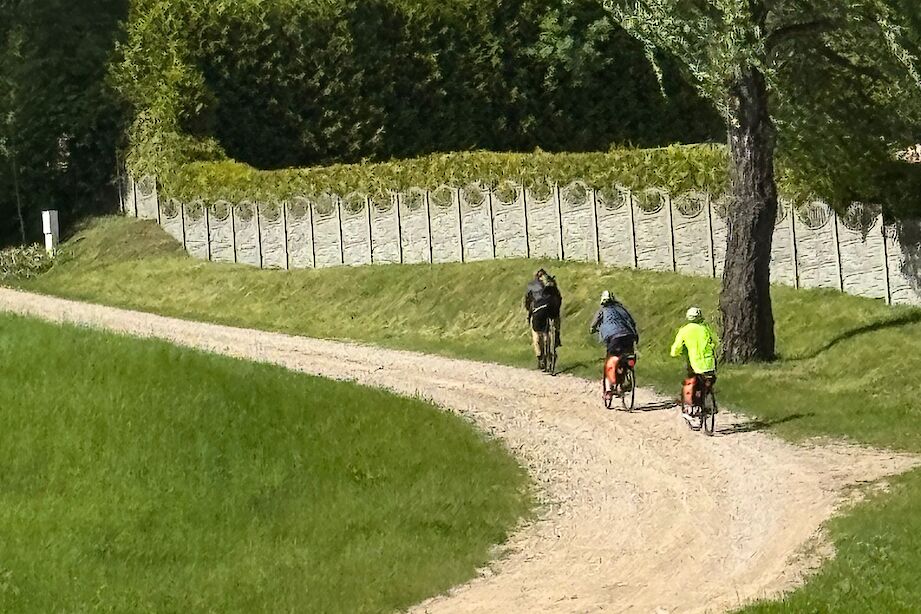
The following morning, we pointed our bikes north as our route followed a beautiful regional park along the Baltic coast. Menacing grey clouds hung overhead while strong winds shoved at us from every direction. Fortunately, the trail was paved and wound through dense forests that provided some welcome shelter from the elements. The objective was simple: reach the support van before the clouds stopped issuing warnings and started taking action. We arrived just in time. Bikes and gear were hastily tossed into the van, doors were slammed shut, and we settled into our seats. Almost on cue, the heavens opened. Timing, as they say, is everything.
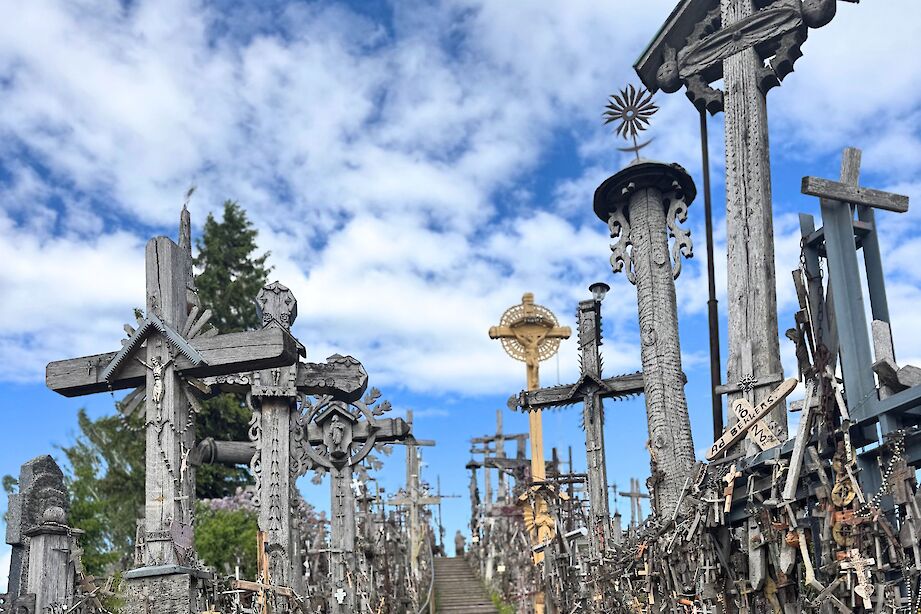
Most of us managed to catch a few winks during the four-hour drive to Riga, Latvia's capital. A few kilometres before crossing the border, we stopped at the Hill of Crosses, a remarkable pilgrimage site covered with hundreds of thousands of crosses, rosaries, and religious symbols. The tradition of leaving crosses on the hill dates back to the nineteenth century. During the Soviet occupation, the site became a powerful symbol of peaceful resistance. Authorities repeatedly bulldozed the hill and removed the crosses, only to find them mysteriously reappearing as local people quietly returned under cover of darkness to replace them. Standing before those modest hills, blanketed by an almost unimaginable sea of crosses, was both humbling and unforgettable.
From there, it was onward to Riga, where a welcome day off the bikes awaited us—a chance to rest weary legs and explore at a more civilized pace.
Riga impressed us from the moment we arrived. Its streets were lively but uncrowded, its architecture stunning, and its history impossible to ignore. The Old Town, conveniently located just steps from our hotel, is wonderfully walkable, with its maze of cobblestone streets, colourful merchant houses, and inviting public squares. We spent our day "off" happily wandering the city, admiring both its architecture and its people. We explored the Central Market, one of Europe's largest markets, housed inside a series of enormous former Zeppelin hangars. We also visited several museums dedicated to Latvia's modern history, particularly the difficult years of Nazi and Soviet occupation. It is impossible to walk through such a place without being deeply affected.
The following morning, we headed north toward Estonia. It felt good to be back on our bikes again—like reconnecting with an old friend after a brief separation. We followed the Baltic coastline, eventually crossing the Latvian-Estonian border and winding our way through sleepy fishing villages, past seaside meadows and reed-filled lagoons that serve as favourite resting spots for migratory birds. Quiet coves and sandy beaches stretched along our left, while rows of blooming lilac trees lined the road to our right. An unusual pairing—sea salt and lilacs rarely share the same stage—but what a fragrance. We took our time that day, lingering a little longer over our customary coffee stops and making frequent pauses simply to “smell the lilacs”.
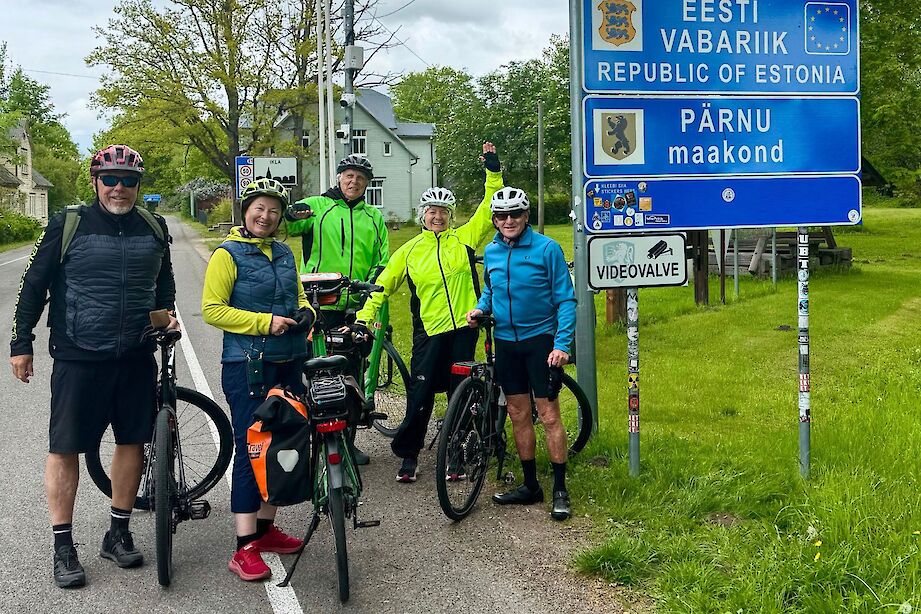
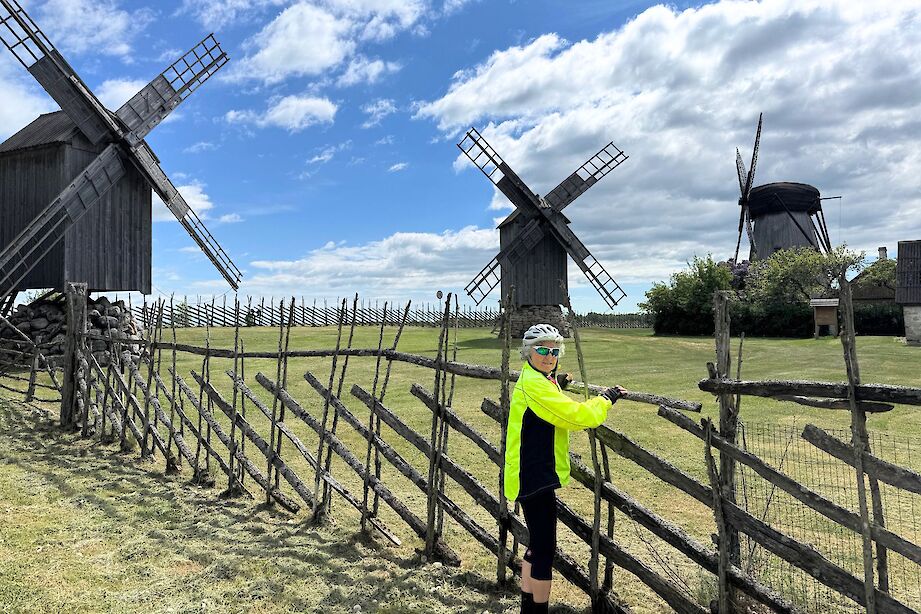
The next morning, our support vehicle driver informed us that the day’s highlights would be windmills and craters. After a short ferry ride to Saaremaa Island, we began our day's cycling adventure. Before long—less than an hour into the ride—the island's famous windmills appeared on the horizon. Five of them stood proudly beside the road—the last preserved examples of the hundreds that once dotted the Estonian countryside. Saaremaa alone once had more than a thousand windmills grinding grain for local farmers. Considering the winds we had been battling on our bikes, it was easy to understand why islanders centuries ago decided they might as well put all that breeze to work.
Next came the craters—or more specifically, the Kaali Meteorite Crater, one of Estonia’s most remarkable natural landmarks and among the world’s most significant impact sites. Thousands of years ago, a meteorite exploded over Saaremaa before crashing into the earth with tremendous force.
Never one to pass up a photo opportunity, I persuaded my cycling companions to join me on a short walk through the forest in search of this famous hole in the ground. We had no trouble finding it. Standing beside the crater, there was an almost eerie stillness in the air. A giant depression in the middle of a forest, created by something that arrived from outer space long before Estonia even existed. How cool is that?
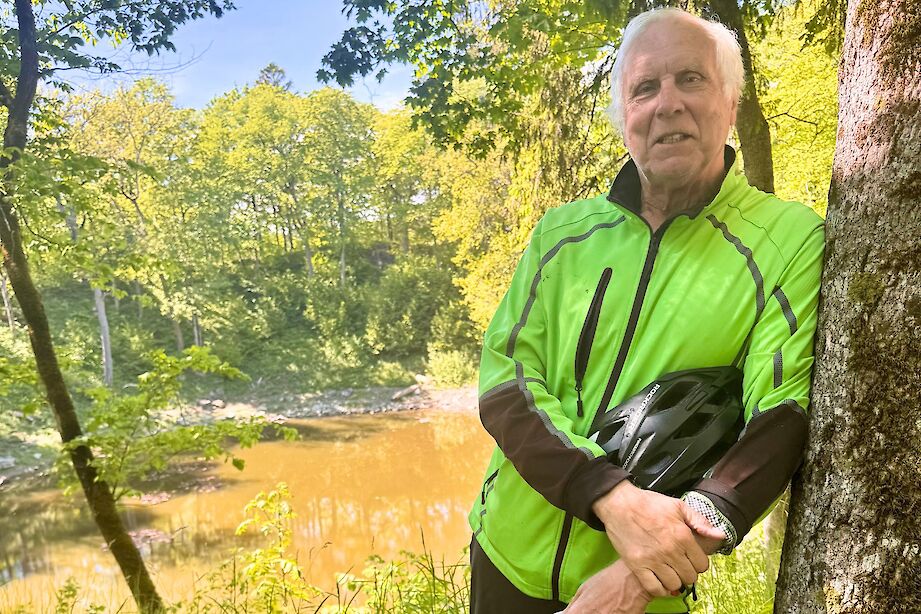
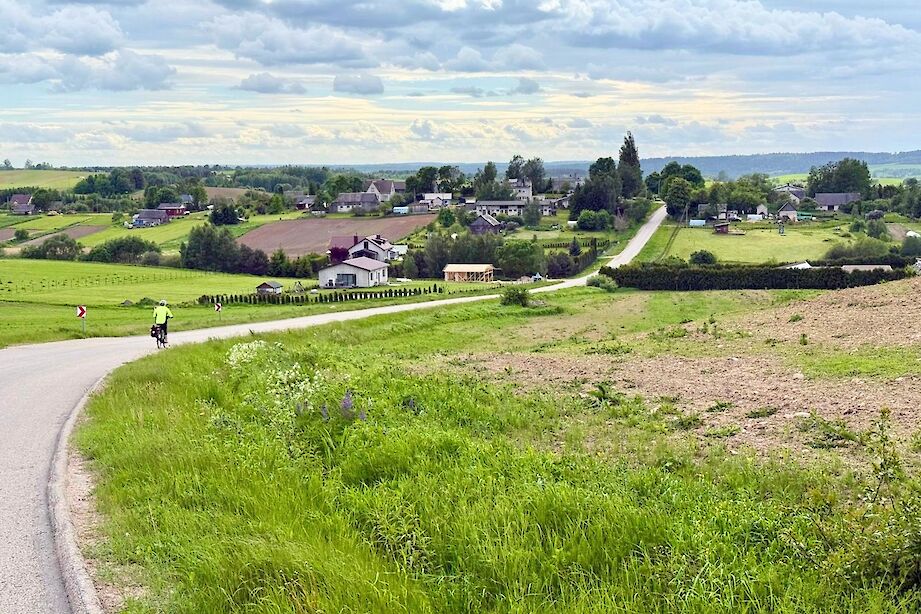
For the first time on the trip, I rode in cycling shorts rather than layers. Blue skies, mild temperatures, and a gentle tailwind pushing us along the coast created near-perfect riding conditions. We spent the day soaking in Saaremaa’s beauty. At times the landscape felt gentle and pastoral, at others, rugged and windswept. It seemed like one of those corners of Europe that many travellers simply pass by, never realizing what they’re missing.
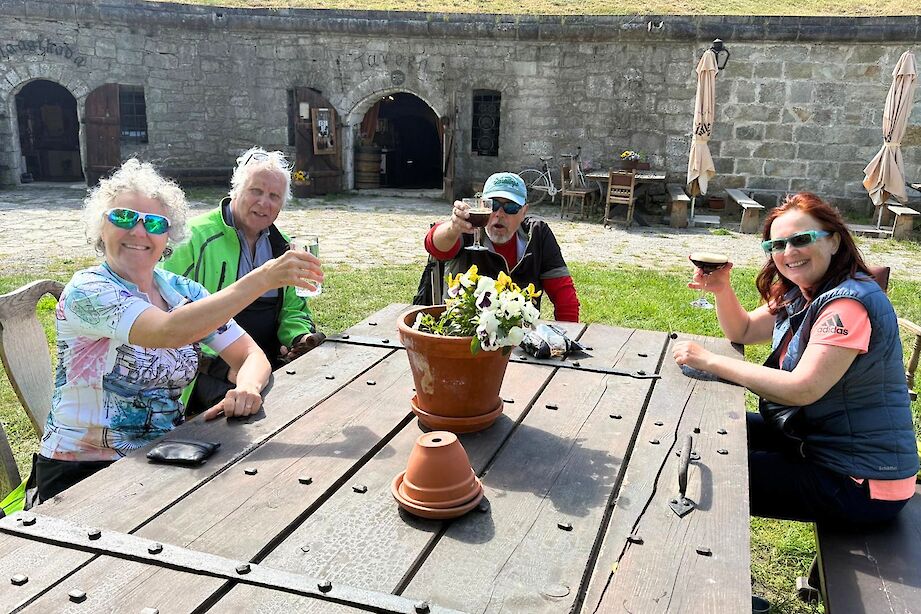
The kilometres slipped by effortlessly, and soon we found ourselves back in Kuressaare, our overnight stop. Before reaching our hotel, however, we made one final stop at another of the island’s iconic landmarks: Kuressaare Episcopal Castle, the best-preserved medieval fortress in the Baltics. Built in the late 14th century for the bishops of Saaremaa, the castle remains remarkably intact, surrounded by imposing bastions, moats, and parkland.
We briefly considered visiting the museum. Then we noticed a courtyard café. We did not visit the museum. History lost. Instead, we settled in for a couple of espresso martinis, a local concoction involving vodka and chaga mushrooms. Not exactly what the bishops had in mind when they built the place, but after a few rounds, the distinction between the 14th and the 21st century became increasingly academic. From there, events unfolded pretty much as you might expect. Somehow, we managed to locate our bicycles, and somehow those bicycles found their way back to our hotel. Another memorable day immersed in the raw beauty of Saaremaa—and further evidence that medieval castles are best appreciated with a bit of vodka and chaga mushrooms.
Our final day of riding began with a farewell to Saaremaa and a return to the mainland. Energy levels were low, enthusiasm was lower, and even our usual coffee stops seemed unable to perform their magic. Meanwhile, the weather appeared determined to ignore our collective sluggishness. Under bright blue skies and unusually warm temperatures, we cycled along the Baltic coast, stopping first at Keila-Joa Waterfall and later at the dramatic Türisalu Cliffs overlooking the Gulf of Finland. Both were spectacular, but it was obvious we were all running on low batteries—and this time, we weren’t talking about our e-bikes.
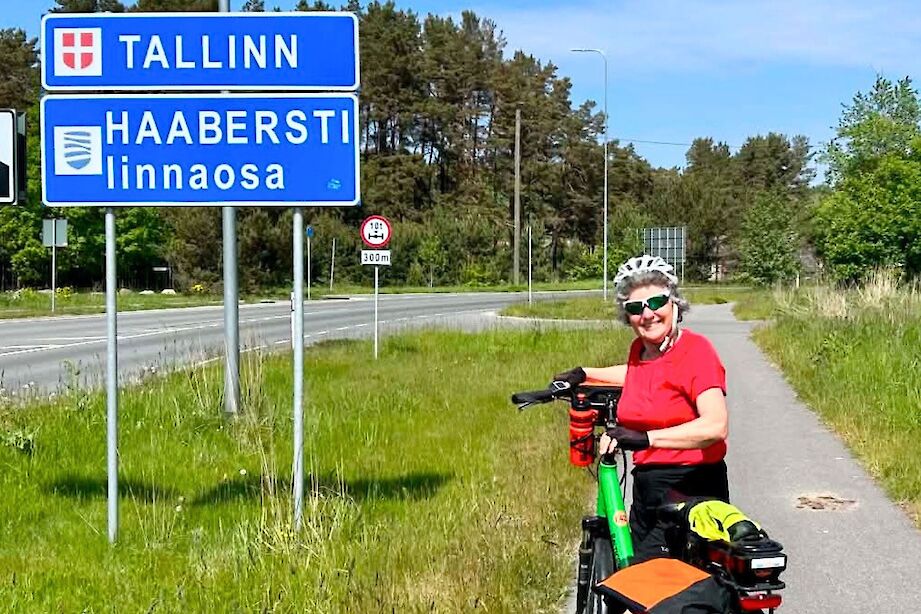
We wasted little time reaching Tallinn, the final destination of the tour. With tired legs and sore bums, we retreated to our hotel rooms for some needed recovery. But the trip still had one final gem in store: Tallinn’s Old Town. Somehow, our fatigue vanished the moment our two-hour guided walking tour began.
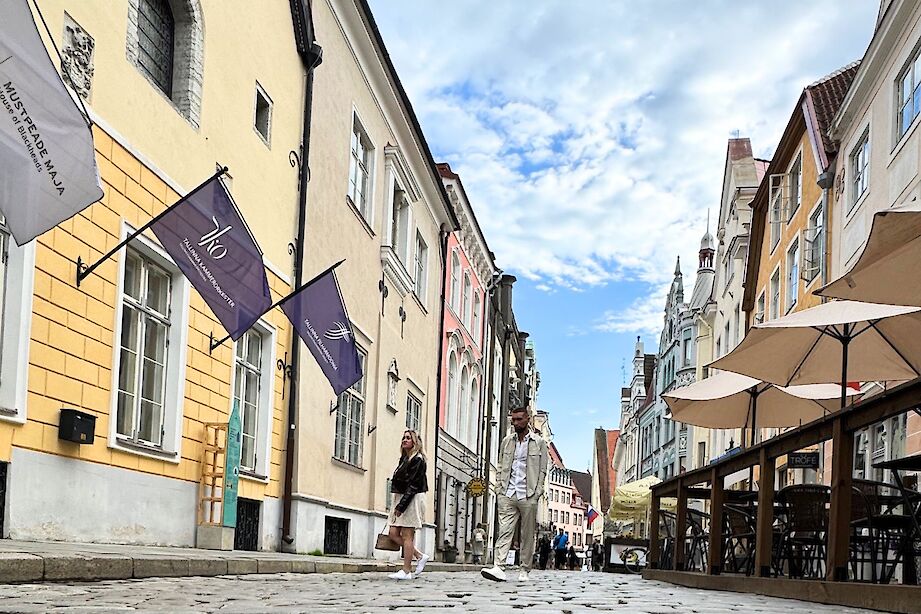
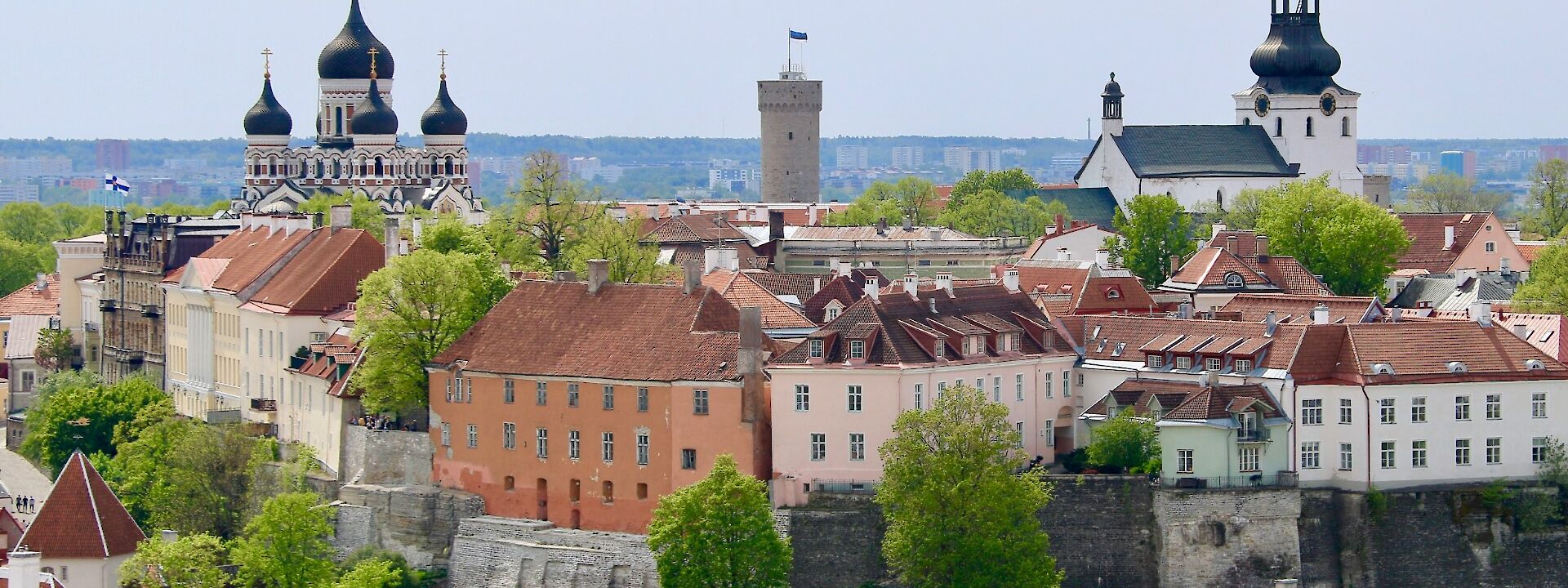
It was as if someone had plugged us back into a charger. Suddenly, we were wandering cobblestone streets, gazing up at medieval towers, and peering into centuries-old merchant houses. Remarkably well preserved, Tallinn’s Old Town dates back to the 13th century and is recognized as a UNESCO World Heritage Site. It is one of Europe’s finest medieval districts—a place where history is not confined to museums but seems to spill out onto every street corner.
It was a fitting finale to an unforgettable journey through the Baltics: 441 kilometres on two wheels, three new countries explored, and countless memories collected along the way.
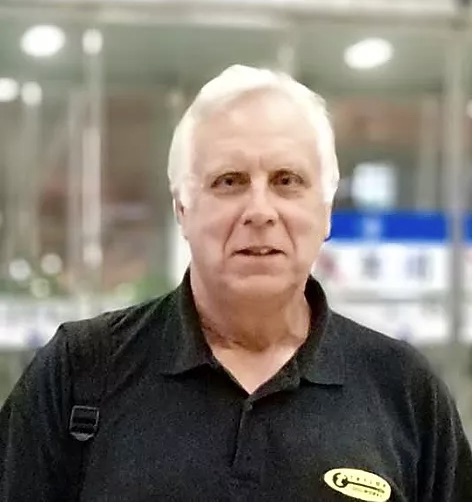
Raymond Lemoine has recently retired after a forty-year career in education. He now spends more time on two wheels than at a desk. He and his wife Madeleine are passionate cyclists, with adventures that have taken them across Canada, through Europe, and into Central and South Asia. No matter how far they ride, they always love coming home to Port Moody, British Columbia.
Comments
Nargis
3 months ago
Verified Reviewer
Post Comment
Related Categories
Related Countries
Recent Posts
- What Does a Day on a Bike & Boat Tour Really Look Like?
- The Power of Slow Travel: Walking Through Germany with Explorer Karl Bushby
- Windmills, Craters, and Cormorants – Cycling the Baltics (Vilnius to Tallinn)
- How to Choose the Right Active Vacation (Bike, Boat, Hiking & Multi-Adventure Tours Explained)
- Hennie’s Tripsite Travelogue – Argentina & Chile (Patagonia)