The Power of Slow Travel: Walking Through Germany with Explorer Karl Bushby
From Bavaria to Frankfurt, Tripsite joined the world's longest continuous walker – and bought the shoes that will carry him to the end of his 27-year journey.
He’s recognized as one of the most intrepid explorers of his generation. In 1998, Karl Bushby set out to walk the longest unbroken path in human history, returning to Hull, England, only once he reaches his hometown on foot. From Punta Arenas via the Darien Gap, Bering Strait, Caspian Sea, and soon the English Channel, Karl has spent nearly three decades walking around the world.
- You can watch a brief overview of his epic Goliath Expedition here -
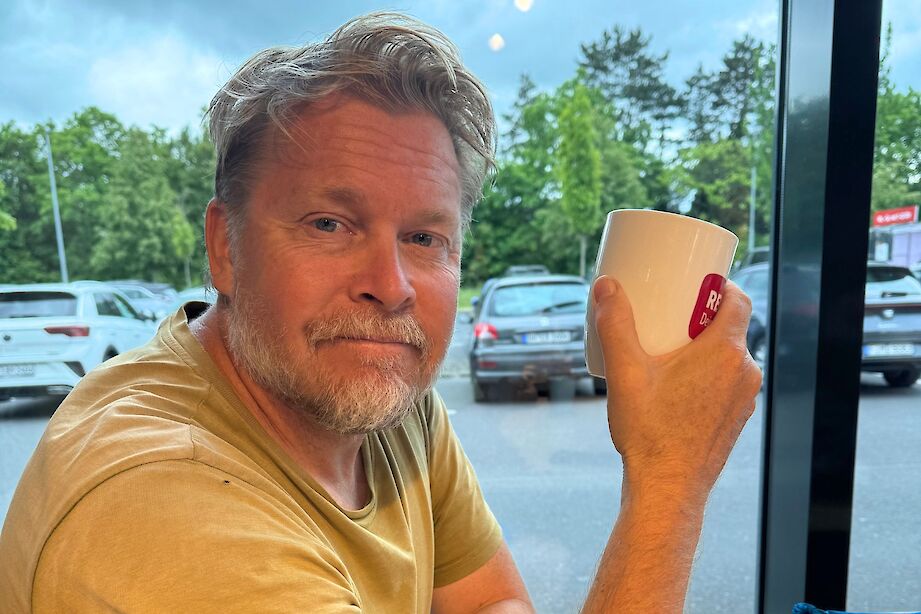
In 2017, Tripsite's Rosalind Perrett met explorer Karl Bushby in Ulaanbaatar, Mongolia. As their paths diverged, Rosalind had the distinct feeling that they would meet again – and that, next time, it would be on the road. Nine years later, that instinct proved correct.
In May 2026, Rosalind joined Karl for six days on the trail, covering roughly 120 kilometres between Fuchsstadt and Frankfurt as he continued the final stages of his expedition. Along the way, they experienced the qualities that make active travel so rewarding: deeper connections, slower discoveries, and a stronger sense of place.
Here are Rosalind's reflections from the road.
The Man Behind the Expedition
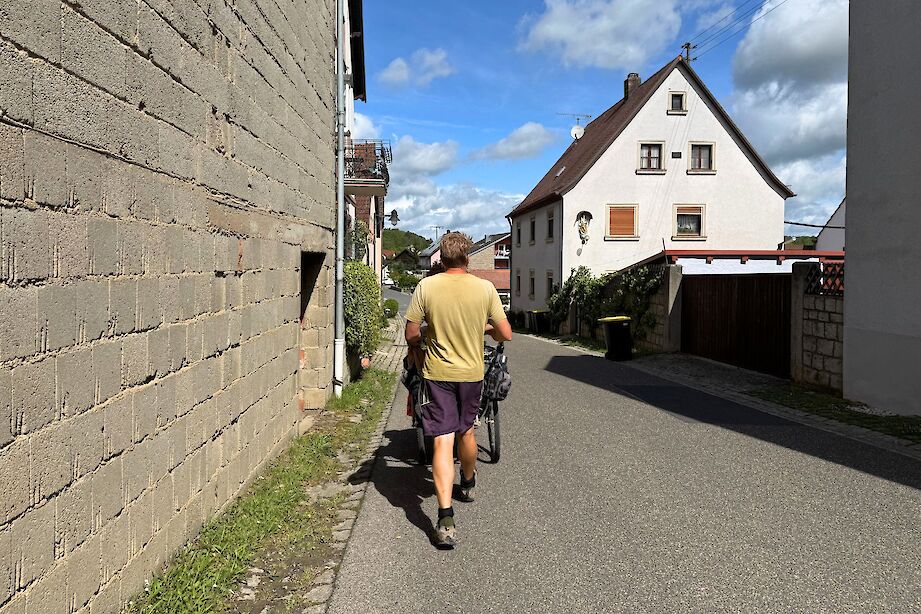
When people encounter the story of Karl Bushby, it is easy to imagine a larger-than-life adventurer, defined entirely by the scale of his achievement. But the reality is that Karl is a man of remarkable humility.
More than once, he referred to himself as "just another guy" and admitted that he sometimes finds the attention surrounding his journey overwhelming. Despite crossing continents and spending 27 years on the road, he remains remarkably grounded, finding joy in simple things that many of us might overlook. One of those things is clouds.
As we walked through Germany, Karl frequently pointed out unusual cloud formations overhead. After years spent crossing deserts, jungles, mountains, and open plains, he still pays close attention to the sky and the ever-changing horizon. I found that telling. His journey has demanded a deep connection with the natural world and whatever conditions it chooses to provide, yet he still pauses to appreciate its beauty.
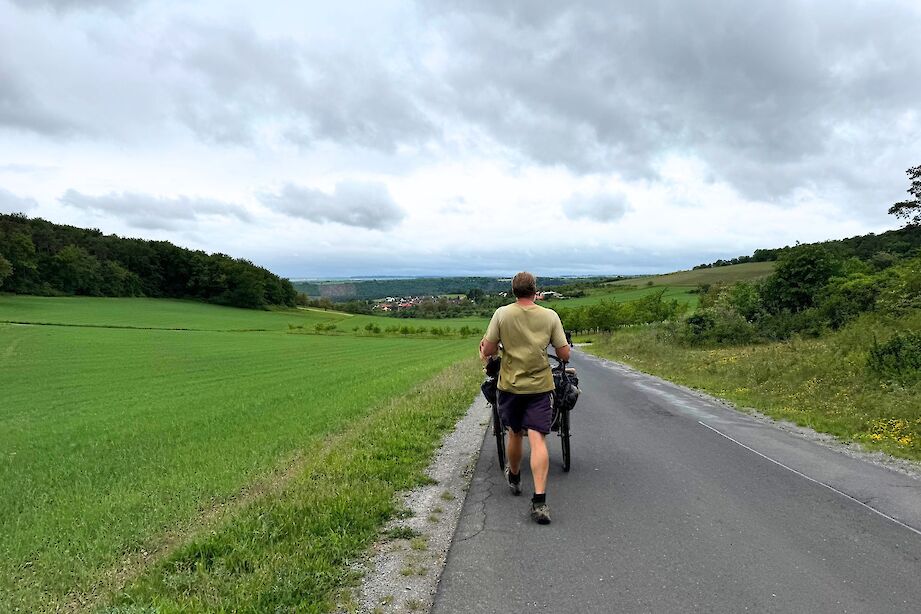
Walking alongside Karl, I was reminded that extraordinary achievements are rarely built on extraordinary personalities. More often, they are built on extraordinary consistency. The world's longest walking expedition is, ultimately, the result of one simple act repeated day after day, year after year: putting one foot in front of the other.
Perhaps most surprising was his honesty about returning home. Despite being British, Karl admitted that returning to Europe has not been easy. He spoke fondly of the tropics, admitting that after so many years in warmer climates, Europe has felt like a difficult adjustment.
After spending much of his life moving through distant landscapes, he is now approaching the end of a journey that will eventually bring him back to England – a country whose people, places, and politics have changed considerably during his 27 years away. Returning home, it seems, may prove almost as significant as setting out. This reminded me that every great journey asks the same question: not just how do you leave home, but how do you return to it?
Germany: Landscapes Made For Slow Travel
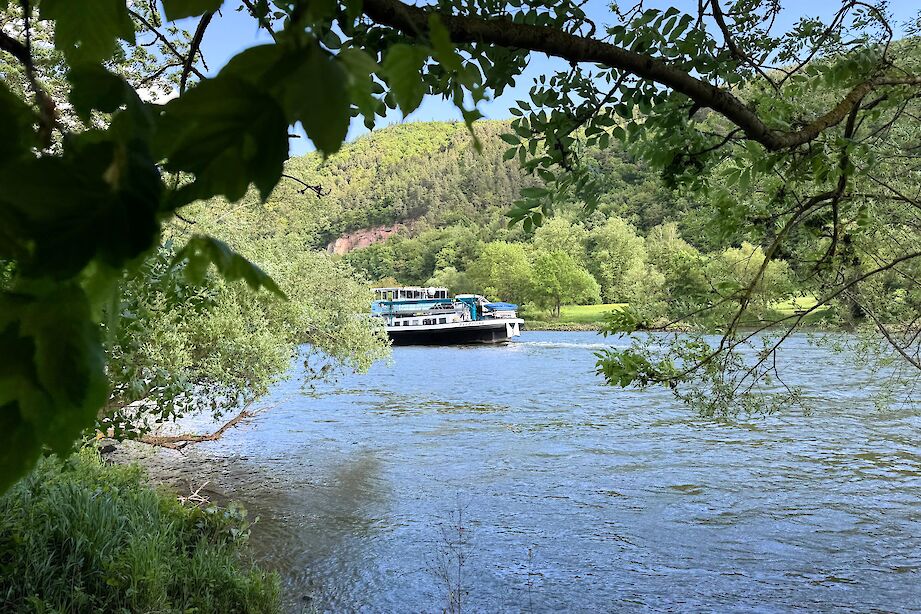
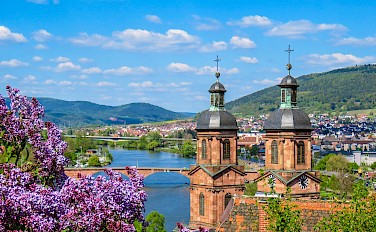
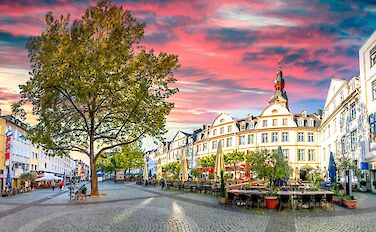
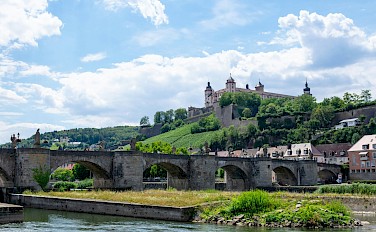
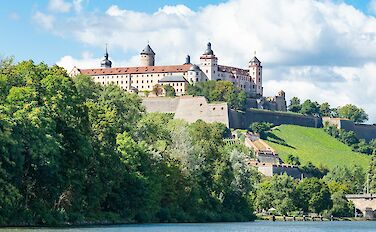
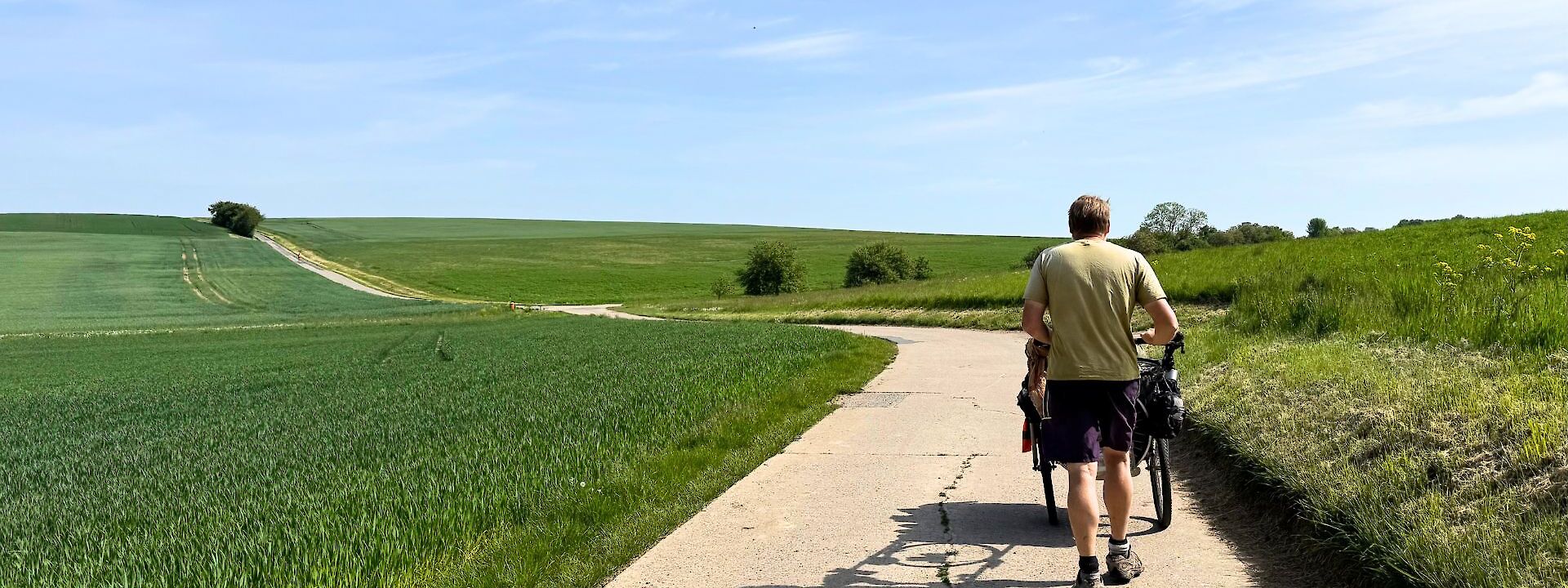
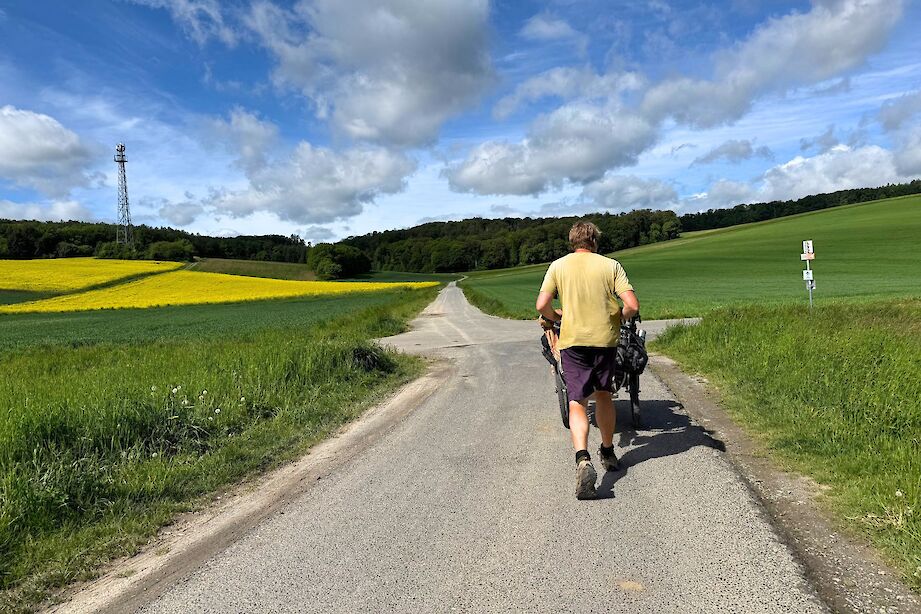
The route itself, chosen by Karl for directness rather than sightseeing, was a reminder of why Germany remains one of Europe's great active travel destinations. From Fuchsstadt, we walked through flower meadows, rolling farmland, and a string of picturesque Franconian and Bavarian towns including Waldbüttelbrunn, Wertheim, Collenberg, Miltenberg, and Obernburg.
For much of the journey, we followed Germany's rivers, sharing the landscape with a sight very familiar to Tripsite staff – that of barges and cruise vessels. The riverside paths were busy with cyclists enjoying one of Germany's excellent long-distance cycle routes, and it was impossible not to think of the many Tripsite travelers who explore this region by bike and boat.
Along the route, we paused in traditional biergartens, sampled local bratwurst, and tasted regional wines. Day after day, the route revealed the simple truth at the heart of active travel: the slower you move through a place, the more of it you get to keep.
Walking Changes a Traveler’s Perception of Place and Belonging
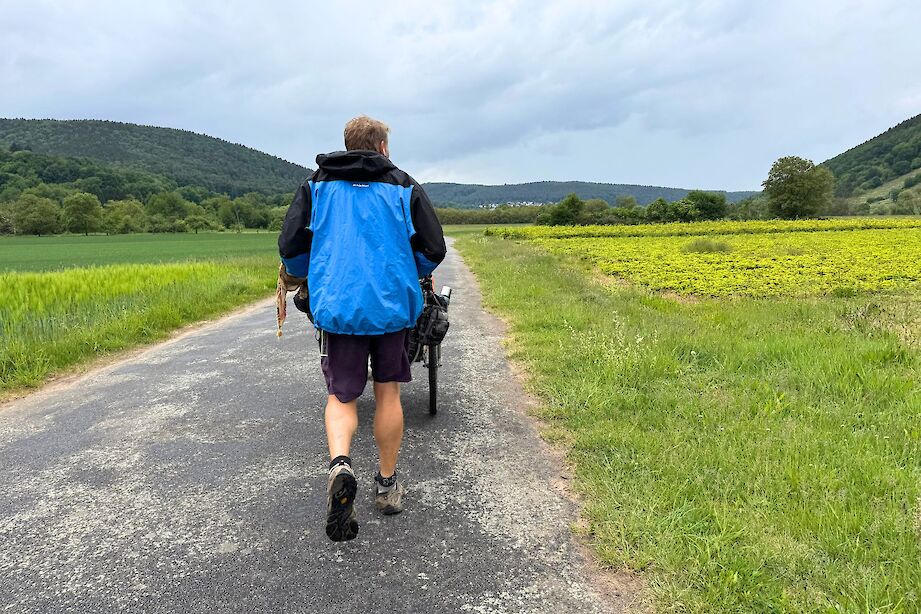
Walking 25–32 kilometres every day changes your relationship with a place in ways I hadn't expected. Scenery doesn't flash past through a car window – it unfolds gradually, directly in front of your eyes. A distant church spire becomes a village. A patchwork of fields becomes somewhere you've actually walked.
Somewhere between Fuchsstadt and Frankfurt, Germany stopped feeling unfamiliar. I realized I was no longer simply traveling through the country – I had settled into its rhythm. It struck me that any soil can feel like home soil if you approach a place with enough curiosity, openness, and time.
To me, that is one of the greatest gifts of active travel. Whether you're cycling from village to village, following a river by bike and boat, or hiking between mountain communities, traveling at a human pace allows you to become part of a place rather than simply passing through it. I believe that there is something particularly powerful about experiencing a new environment and feeling, for a little while, that you truly belong there.
Slow Travel Creates Space for Connection
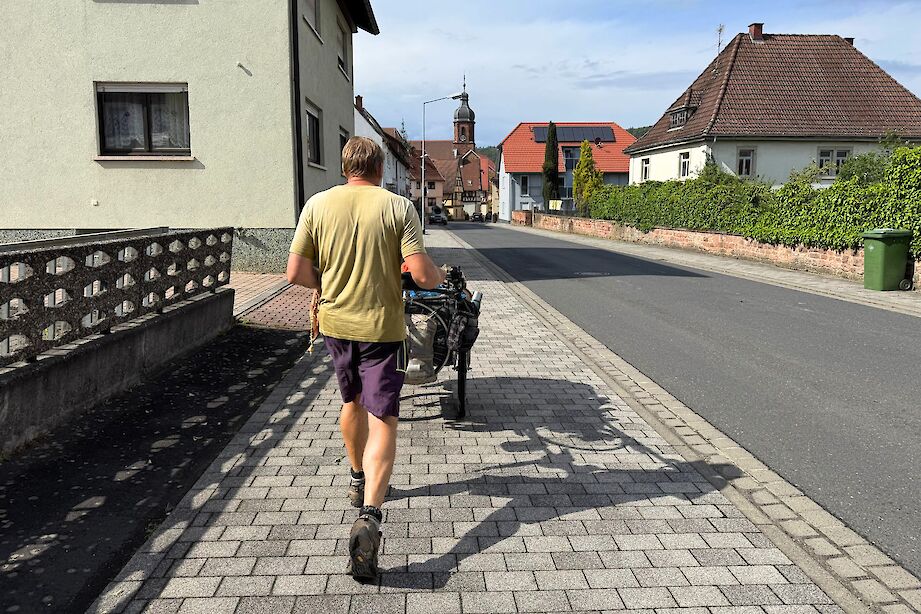
As we walked, Karl interacted with the local community long enough for the first suspicious glances to transform into smiles of goodwill and words of admiration. This has been the case throughout his journey. His expedition has been possible, in large part, because of the generosity of strangers. Individuals, families, and businesses around the world have stopped by the roadside to offer food, water, or even a place to sleep. In his own words, "I've found nothing but the best in people in those 27 years, which has been remarkable."
When you move through a country on foot or by bike, interactions with locals occur naturally and deepen your sense of place. The people who call these towns and villages home can teach you far more than a guidebook ever could. The chance to eat with them, be shown around a town, and even stay in their homes makes your perceptions so much richer and your memories far more enduring.
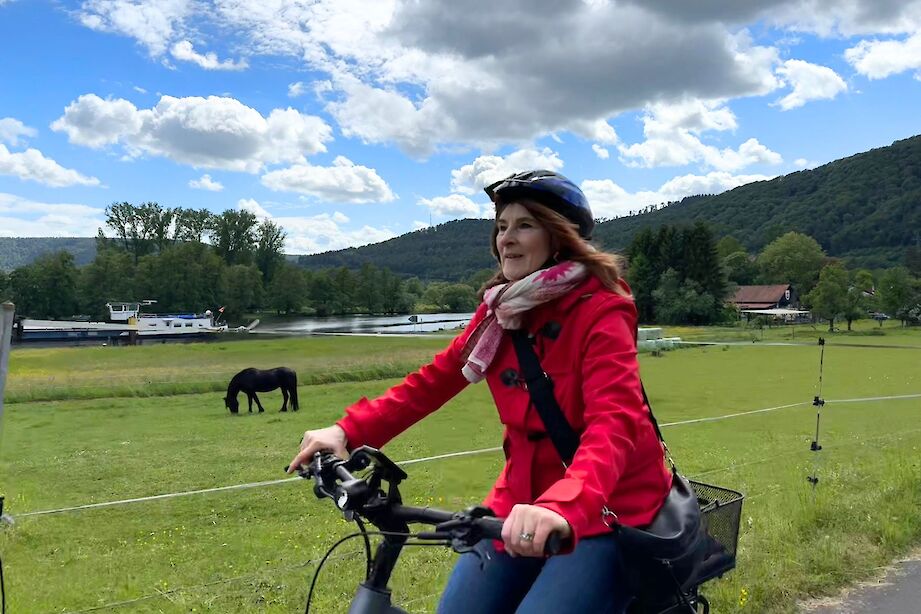
Many Tripsite travelers return from their journeys talking not only about the scenery, but about the people they met along the way: the café owner who shared a recommendation, the boat captain who explained a regional tradition, or the fellow traveler who became a lifelong friend. These spontaneous encounters are impossible to manufacture, yet they are often what make a trip truly unforgettable.
Karl's journey also speaks to the power of exploring the world alone – not putting off adventures until you find the right person to accompany you. This is a sentiment we encourage in our own solo clients, who often return having connected with fellow travelers from all over the world.
Despite walking much of the globe alone, Karl has built connections across continents, proving that moving through the world openly often creates more opportunities for friendships, not fewer.
Arriving in Places Feels Different on Foot
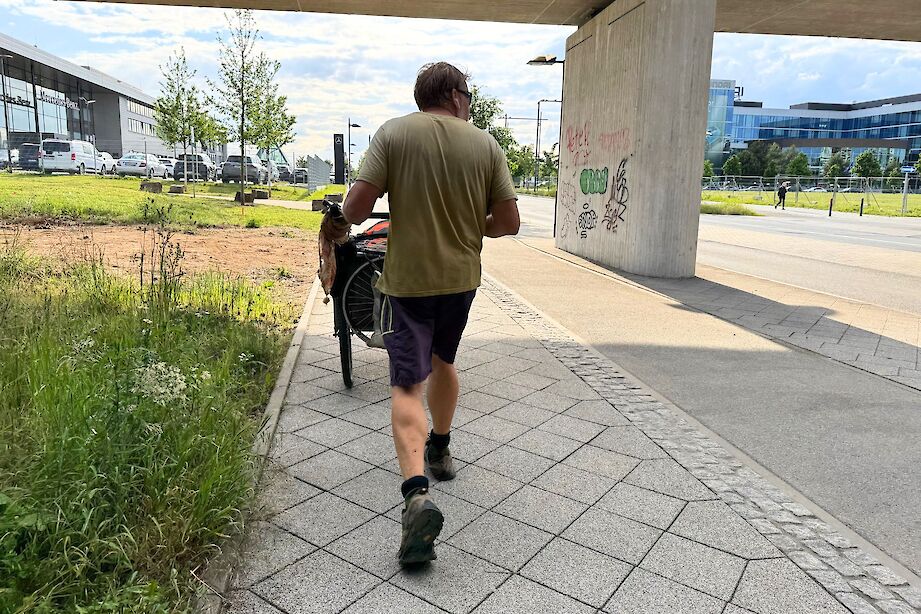
When you approach a new town, city, or village on foot, you have time to understand its topography, notice how the skyline traces its own shape against the sky, and imagine what stories, architecture, and experiences await ahead.
As we approached Frankfurt, I noticed a tangible increase in excitement as the environment changed from sleepy meadows to roads populated by buses, commuters, and airport traffic. I could feel the gradual shift in atmosphere as Germany's financial capital approached – a sense of anticipation that often has little time to register when hurtling towards a destination by car or train.
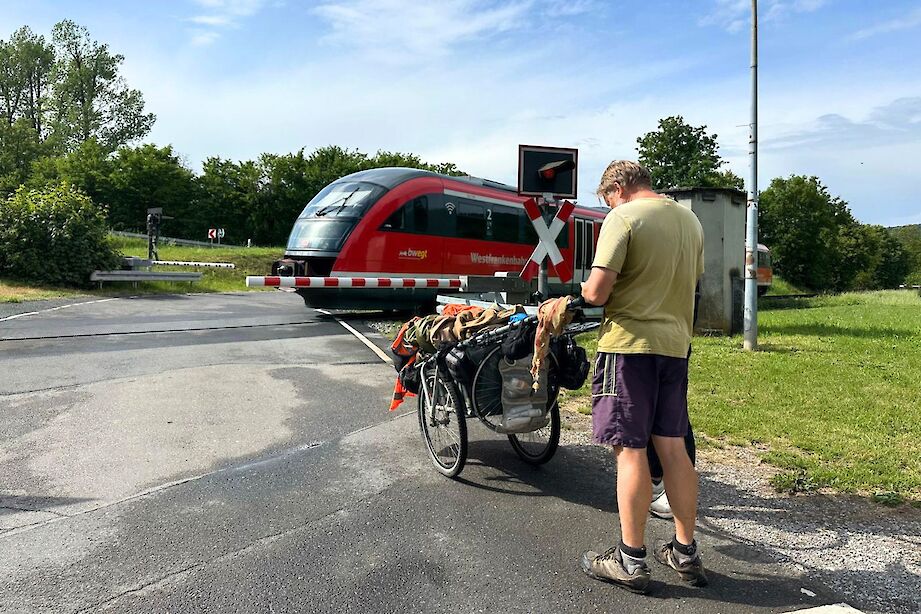
For Karl, approaching Frankfurt wasn't simply a matter of arriving in a city. It meant guiding "The Beast" – the cart that carries his life and supplies – through increasingly complex terrain. Quiet riverside paths gave way to traffic lights, curbs, crossings, and busy roads. Watching him navigate the city made me appreciate how different urban environments feel when you're moving through them entirely under your own power.
But what struck me most was how much time walking gives you to anticipate an arrival. Long before we reached Frankfurt's outskirts, I found myself wondering what the city would feel like, where we would eat that evening, and what it would be like to exchange forests and riverside paths for airport terminals and departure gates. By the time we finally arrived, Frankfurt already felt familiar.
I think this is one reason active travel can feel so rewarding. Whether arriving by bike in a new city, sailing into a riverside town on a bike and boat tour, or hiking into a mountain village, reaching a destination under your own power creates a sense of anticipation and accomplishment that is difficult to replicate through passive forms of travel.
The Physicality of Active Travel Is One of Its Most Rewarding Benefits
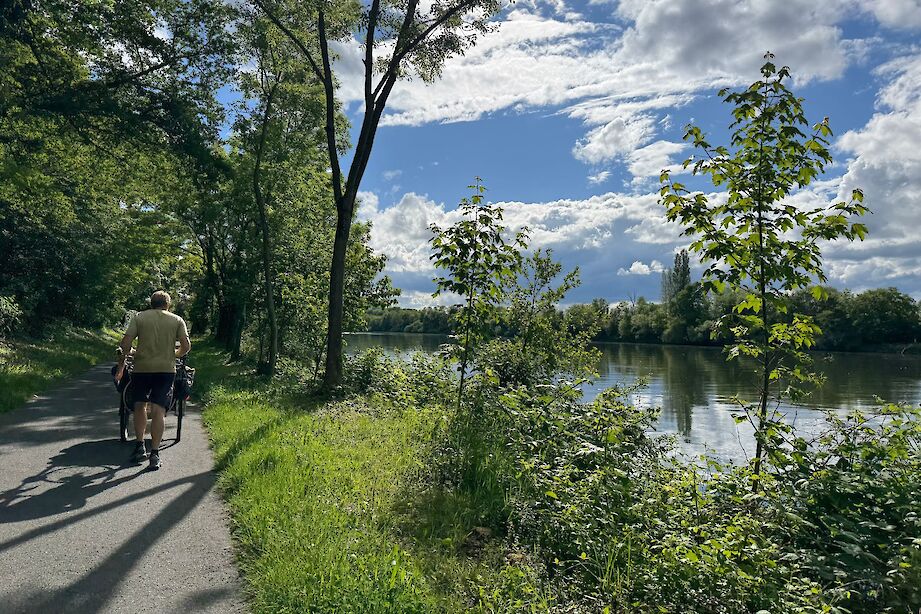
In my week with Karl, we walked between 25 and 32 kilometres every day. This daily physical challenge was one of the most rewarding aspects of the experience. Views feel more spectacular, food tastes more delicious, and a comfortable hotel feels even more welcoming when you've reached it under your own steam.
Even after 27 years of walking, Karl still maintains a surprisingly steady pace, often disappearing into what he describes as a "zone" where he loses all sense of time. The act of moving for hours each day, he says, has helped him stay sane – a cathartic outlet for the tensions, pressures, and challenges that all of us experience from time to time.
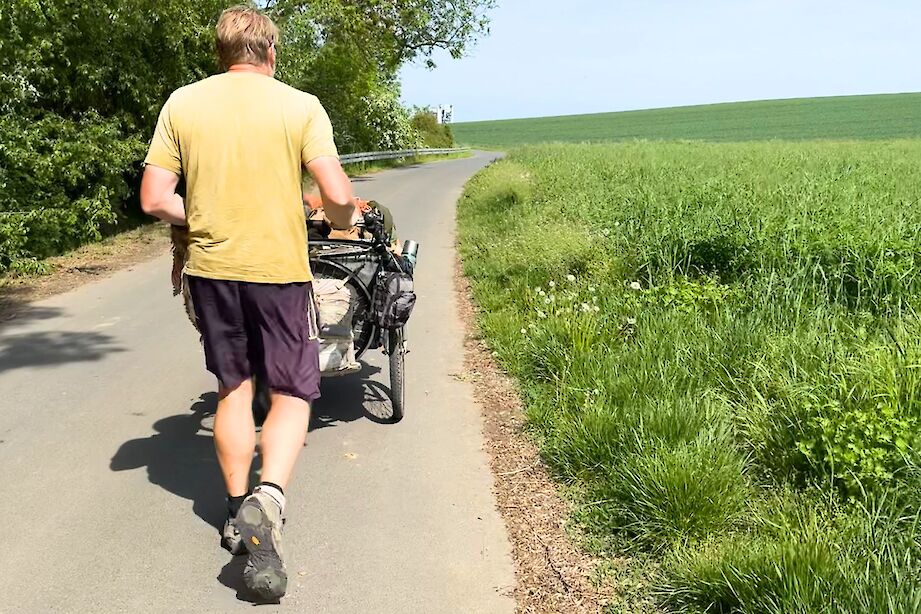
Active travel offers something fundamentally different from a traditional sun-and-sand holiday. Tuning into your body through walking, hiking, or cycling reconnects you with the landscapes, cultures, and people around you. My week with Karl only strengthened my belief that the most memorable journeys are often the slowest – traveling under your own power transforms you from a spectator into a participant.
The Shoes That Will Take Karl Bushby Home
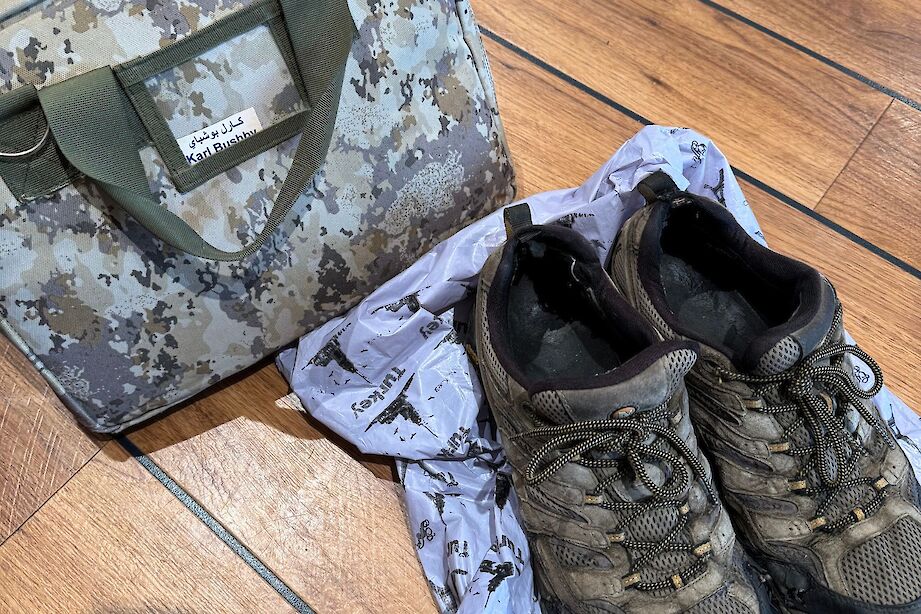
When we reached Frankfurt after more than 100 kilometres on the road, there was one final task to complete.
Karl’s latest pair of hiking shoes had carried him here from Baku, Azerbaijan, but they were falling apart. The sole of one shoe had partially detached, visibly affecting his gait, and there was a hole large enough to see daylight through. It was time to buy the last pair.
Since setting out from Punta Arenas in 1998, Karl’s feet have crossed continents, jungles, deserts, mountain ranges, frozen seas, and countless international borders. He has worn out more pairs of hiking shoes than most people will ever need to count.
The new pair needed to be Merrells, and Karl preferred the same Moab model he had trusted before. There was one pair available in his size, so the decision was made quickly. He put them on and walked out of the shop – because when a pair of shoes has to get you from Frankfurt to Hull, you'd better start breaking them in immediately.
Tripsite was privileged to purchase this final pair for Karl. We are travelers helping travelers, after all. While most of us may never attempt a 27-year expedition, the spirit behind Karl’s journey – curiosity, perseverance, and a desire to experience the world at a slower pace – resonates deeply with our clients who choose active adventures every year.
See You On The Road
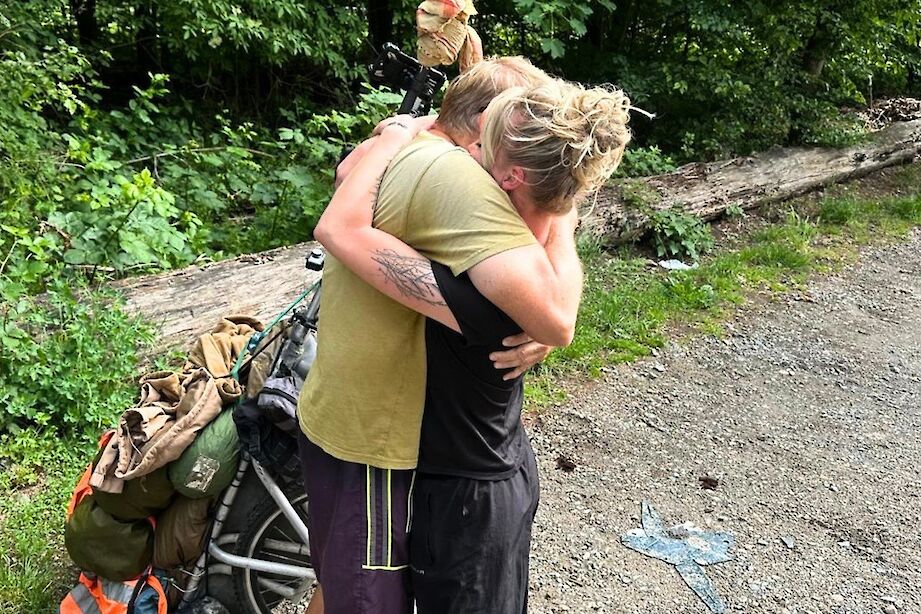
After spending six days walking by Karl’s side, saying goodbye outside Frankfurt Airport felt strangely abrupt. One moment we were sharing miles of trail, forests, and conversations; the next we were heading our separate ways.
But fortunately, it wasn’t really goodbye. Karl still has ground to cover before reaching Hull, and I hope to join him for the last section of his expedition.
For now, I left Germany convinced of something Karl has spent 27 years proving: the more intentionally you move through the world, the more of it you get to keep.
Interested in experiencing Germany the ‘slow’ way for yourself? Tripsite offers the following tours along Rosalind’s route with Karl Bushby:
Or view all of our Germany tours on our interactive map.
Comments
Post Comment
Related Categories
Related Countries
Recent Posts
- Tripsite’s Guide to King’s Day in the Netherlands
- What Does a Day on a Bike & Boat Tour Really Look Like?
- The Power of Slow Travel: Walking Through Germany with Explorer Karl Bushby
- Windmills, Craters, and Cormorants – Cycling the Baltics (Vilnius to Tallinn)
- How to Choose the Right Active Vacation (Bike, Boat, Hiking & Multi-Adventure Tours Explained)